

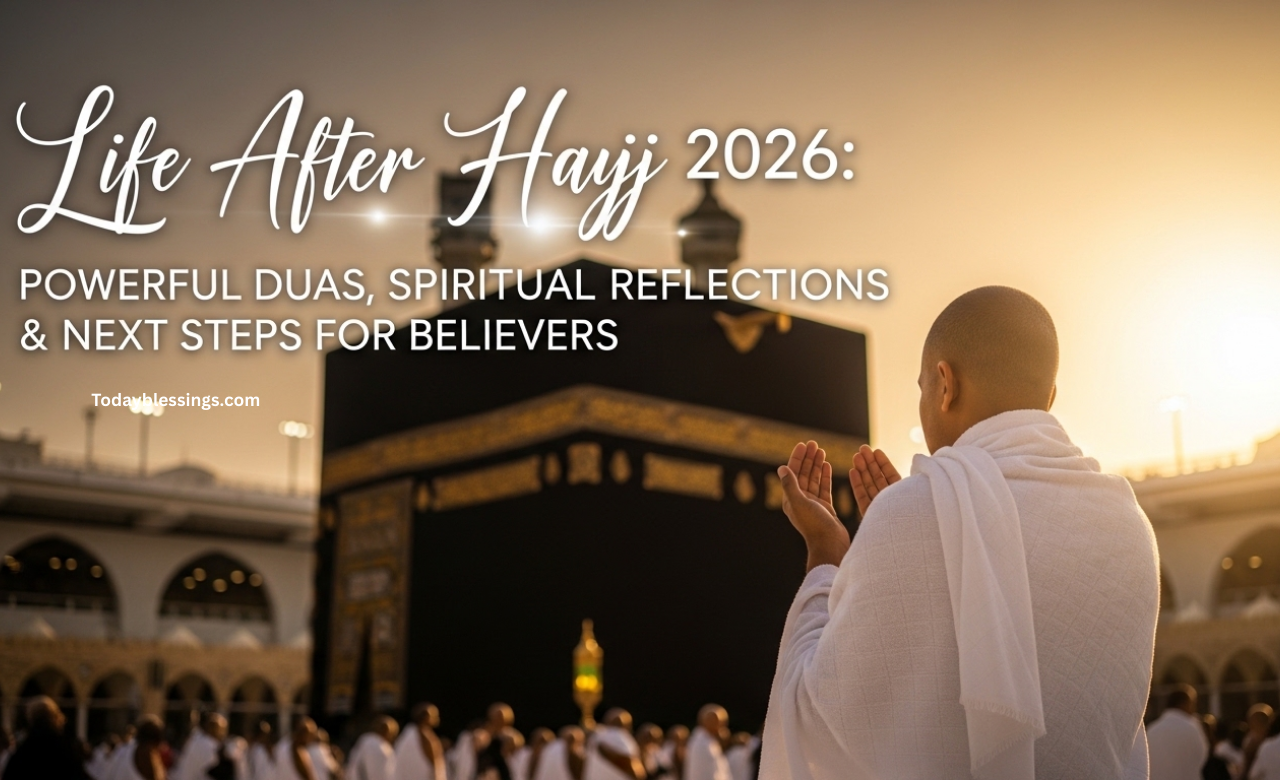
Many believers return home carrying mixed emotions of gratitude, tears, hope, exhaustion, and sometimes a quiet fear of losing what they gained in the sacred days of Makkah. Bills wait, health issues remain, family responsibilities return, and the world feels just as loud as before. In such moments, faith is tested not in the Haram, but at home.
Life After Hajj 2026: Powerful Duas, Spiritual Reflections & Next Steps for Believers is written for those hearts that want to hold on to Allah while navigating real life. This post is not only about rituals it is about healing, consistency, and transformation. It gently answers what to do after Hajj, how to live with purpose, and how to protect the light Allah placed in your heart.
Within these words, you will find encouragement, comfort, and direction through reflection, wisdom, and prayer. We will explore how to maintain spirituality after Hajj, meaningful duas after Hajj return, authentic Islamic guidance after Hajj, and practical sunnah practices after Hajj that fit into everyday life. This guide also addresses the post Hajj routine for Muslims, how to stay consistent after Hajj, the Hajj impact on personal character, and the reality of spiritual discipline after Hajj.
If you feel spiritual emptiness after Hajj, face emotional struggle after Hajj, or carry a fear of losing faith after Hajj, know that you are not alone. Through renewing intentions after Hajj, seeking Allah’s pleasure after Hajj, building consistency in worship, and finding inner peace through faith, this article will help you walk forward steadily, sincerely, and with hope.
Life After Hajj 2026: How to Protect the Spiritual Change You Gained
Returning from Hajj often feels like waking up from a beautiful dream. Your heart tasted closeness to Allah, your tears flowed freely, and your soul felt lighter than it had in years. The challenge begins when daily life slowly tries to erase that softness. Protecting the spiritual change of Hajj is not about doing more it is about doing what matters, consistently.
Hajj plants a seed of sincerity. To protect it, believers must water it with intention, patience, and small acts of worship. Even simple habits like guarding prayers, avoiding harmful speech, and remembering Allah daily help preserve that transformation. The goal is not perfection, but direction always turning back to Allah.
Quotes
- Imam Al-Ghazali: True success is returning from Hajj with a heart more fearful of Allah and kinder to His creation.
- Hasan al-Basri: The accepted Hajj is known by a change in character, not by stories of travel.
- Ibn Qayyim: Deeds after worship prove whether the heart was sincere during it.
- Umar ibn Al-Khattab: Accountability after obedience is greater than accountability during it.
- Ali ibn Abi Talib: The best worship is consistency, even if small.
- Sufyan al-Thawri: Fear losing sincerity more than losing deeds.
- Imam Malik: Knowledge and action together preserve faith.
- Rumi: Where your heart bows daily, there lies your true pilgrimage.
- Ibn Taymiyyah: Faith increases with obedience and decreases with neglect.
- Abdullah ibn Mas’ud: The believer guards his heart more than his wealth.
Reflection: Hajj is not meant to end at the airport it is meant to reshape how you live. Protecting its change means choosing Allah again and again, even when it is hard.
Prayer: O Allah, protect the light You placed in my heart and never let me return to who I was before.
Returning from Hajj in 2026: Islamic Guidance for the Days That Follow
The days after Hajj are delicate. A believer often feels watched by their own conscience, fearing mistakes more than before. Islam offers gentle guidance for this phase of balance, mercy, and istiqamah. Returning home does not mean isolating yourself from life; it means engaging with life through faith.
Islam teaches that the best deeds are those done regularly. Begin by establishing prayer, honesty, humility, and good manners. Seek knowledge, even slowly, and remain in the company of people who remind you of Allah. These steps anchor the heart after the spiritual intensity of Hajj.
Quotes
- Prophet Muhammad ﷺ: The most beloved deeds to Allah are those done consistently.
- Ibn Abbas: Guidance after worship is a sign of acceptance.
- Imam Ahmad: Faith survives through patience and routine.
- Al-Fudayl ibn Iyad: Sincerity is to act the same in private and public.
- Aisha رضي الله عنها: The Prophet loved balanced worship.
- Imam Nawawi: Small deeds with pure intention outweigh great deeds without it.
- Hasan al-Basri: Knowledge guides action and protects it.
- Ibn Taymiyyah: True worship continues beyond sacred places.
- Umar ibn Abdul Aziz: Justice begins with the heart.
- Abu Darda: A day without remembrance is a lost day.
Reflection: Islamic guidance after Hajj calls for steadiness, not extremes. Faith flourishes where balance lives.
Prayer: O Allah, guide my days after Hajj and make my routine pleasing to You.
Emotional and Spiritual Challenges Muslims Face After Hajj
Many pilgrims are surprised by sadness after Hajj. Tears come unexpectedly, motivation dips, and the heart longs for Makkah. This emotional struggle is not a weakness, it is a sign of love for Allah. However, unmanaged grief can turn into spiritual fatigue.
Islam acknowledges emotional cycles. The believer learns to redirect longing into worship, service, and gratitude. By understanding emotions rather than suppressing them, faith matures. Remember: Allah is not only in Makkah He is near wherever you call upon Him.
Quotes
- Ibn Qayyim: Longing for worship is a sign of a living heart.
- Rumi: Where pain grows, healing grows too.
- Imam Ghazali: Tears soften hearts hardened by routine.
- Hasan al-Basri: Sadness can bring sincerity closer.
- Ibn Ata’illah: Distance from places does not mean distance from Allah.
- Ali ibn Abi Talib: Hearts tire as bodies do.
- Aisha رضي الله عنها: Even the Prophet rested between worship.
- Ibn Mas’ud: Faith rises and falls; guard it during its fall.
- Sahl ibn Abdullah: Loneliness brings reflection.
- Umar ibn Al-Khattab: Strength is knowing when to return to Allah.
Reflection: Emotional struggle after Hajj is an invitation to deepen your relationship with Allah, not abandon it.
Prayer: O Allah, heal my heart and replace my sadness with closeness to You.
Daily Habits That Help You Stay Connected to Allah After Hajj
Connection to Allah is built through daily habits, not occasional moments. After Hajj, even five minutes of sincere remembrance can outweigh long but rushed worship. Structure your day around salah, dhikr, and good intentions.
Simple actions morning duas, Quran recitation, honesty at work turn ordinary life into worship. Consistency builds a spiritual rhythm that keeps faith alive.
Quotes
- Prophet Muhammad ﷺ: Remember Allah until people call you excessive.
- Ibn Taymiyyah: Dhikr is nourishment for the soul.
- Hasan al-Basri: Hearts rust without remembrance.
- Imam Shafi’i: Time is a sword—use it wisely.
- Ibn Qayyim: Actions shape hearts.
- Umar ibn Abdul Aziz: Every moment counts.
- Ali ibn Abi Talib: Discipline brings freedom.
- Rabi’a al-Adawiyya: Love Allah in small moments.
- Imam Malik: Routine preserves faith.
- Abu Huraira: Gratitude increases blessings.
Reflection: Daily habits are the bridge between Hajj and lifelong faith.
Prayer: O Allah, make remembrance easy and beloved to my heart.
Living Like a Haji at Home: Sunnah-Based Lifestyle Tips
Being a Haji is not a title, it is a responsibility. The Sunnah teaches humility, kindness, honesty, and mercy. Living like a Haji means reflecting the Prophet’s character at home, work, and community.
When manners improve, Hajj speaks louder than words. Sunnah-based living protects faith and earns trust.
Quotes
- Prophet Muhammad ﷺ: The best among you are best in character.
- Aisha رضي الله عنها: His character was the Quran.
- Ibn Qayyim: Character reveals belief.
- Hasan al-Basri: Worship without manners is incomplete.
- Umar ibn Al-Khattab: Justice begins at home.
- Ali ibn Abi Talib: Humility raises ranks.
- Imam Nawawi: Sunnah balances life.
- Ibn Taymiyyah: Good character is continuous charity.
- Rumi: Let faith reflect in actions.
- Abu Bakr: Mercy strengthens communities.
Reflection: Sunnah-based living turns homes into sacred spaces.
Prayer: O Allah, beautify my character as You beautified my faith.
Duas to Recite After Hajj for Steadfast Faith and Acceptance
Dua is the believer’s anchor after Hajj. Asking Allah for acceptance and steadfastness keeps humility alive. Make dua often, privately, and sincerely.
Quotes
- Prophet Muhammad ﷺ: Dua is worship.
- Ibn Ata’illah: Dua keeps hearts alive.
- Hasan al-Basri: Ask Allah often.
- Imam Ghazali: Dua purifies intention.
- Ibn Qayyim: Dua protects deeds.
- Umar ibn Abdul Aziz: Supplication is strength.
- Ali ibn Abi Talib: Ask before you need.
- Imam Malik: Dua opens doors.
- Rumi: Whisper to Allah.
- Abu Darda: Dua changes destiny.
Reflection: Dua after Hajj keeps the soul dependent on Allah.
Prayer: O Allah, accept my Hajj and keep me steadfast until death.
How to Keep the Hajj Spirit Alive in a Busy World
Life’s pace can suffocate spirituality. Keeping the Hajj spirit alive means slowing the heart even when life moves fast. Prioritize intention, prayer, and gratitude.
Quotes
- Ibn Taymiyyah: Busy hearts forget Allah.
- Hasan al-Basri: Silence nourishes faith.
- Rumi: Slow down for truth.
- Imam Ghazali: Balance revives souls.
- Ali ibn Abi Talib: Time reveals priorities.
- Umar ibn Al-Khattab: Guard your hours.
- Ibn Qayyim: Distraction weakens hearts.
- Imam Shafi’i: Focus protects knowledge.
- Abu Bakr: Remember Allah often.
- Aisha رضي الله عنها: Simplicity strengthens faith.
Reflection: The Hajj spirit lives where intention is protected.
Prayer: O Allah, keep my heart present with You.
Strengthening Imaan After Hajj Through Worship and Character
Iman grows through worship and good character. Salah, fasting, charity, and honesty nourish belief. Character reflects iman’s strength.
Quotes
- Prophet Muhammad ﷺ: Faith has many branches.
- Ibn Mas’ud: Actions reveal belief.
- Hasan al-Basri: Character protects faith.
- Imam Ghazali: Worship cleanses hearts.
- Ibn Qayyim: Faith grows with action.
- Umar ibn Abdul Aziz: Justice strengthens iman.
- Ali ibn Abi Talib: Integrity builds faith.
- Rumi: Faith lives in action.
- Imam Nawawi: Worship refines character.
- Abu Darda: Gentle hearts believe deeply.
Reflection: Iman strengthens when worship shapes character.
Prayer: O Allah, increase my iman and refine my character.
Common Mistakes People Make After Hajj and How to Avoid Them
Some believers expect instant perfection after Hajj, leading to burnout or guilt. Others neglect consistency. Islam teaches gradual growth.
Quotes
- Ibn Taymiyyah: Extremes destroy balance.
- Hasan al-Basri: Consistency matters.
- Imam Ghazali: Intentions matter more than volume.
- Ali ibn Abi Talib: Wisdom prevents regret.
- Umar ibn Al-Khattab: Accountability brings growth.
- Ibn Qayyim: Pride destroys deeds.
- Rumi: Humility preserves faith.
- Imam Malik: Balance sustains worship.
- Abu Bakr: Seek forgiveness often.
- Aisha رضي الله عنها: Ease strengthens devotion.
Reflection: Avoiding mistakes protects the soul from disappointment.
Prayer: O Allah, guide me away from extremes and keep me balanced.
A New Beginning After Hajj 2026: Walking the Path of Consistency
Hajj is not an ending, it is a beginning. Consistency is the true sign of acceptance. Walk forward with hope, patience, and trust in Allah.
Quotes
- Prophet Muhammad ﷺ: Allah loves consistent deeds.
- Ibn Qayyim: Consistency protects faith.
- Hasan al-Basri: Patience sustains worship.
- Imam Ghazali: Small steps lead far.
- Ali ibn Abi Talib: Steadiness brings success.
- Umar ibn Abdul Aziz: End well.
- Rumi: Begin again with sincerity.
- Ibn Taymiyyah: Faith is a journey.
- Imam Nawawi: Continuity matters.
- Abu Darda: Walk slowly but steadily.
Reflection: The journey after Hajj is lifelong and beautiful.
Prayer: O Allah, allow me to walk this path until I meet You pleased.
FAQ
How to live life after Hajj?
Life after Hajj ka matlab hai apni daily life ko Allah ki yaad ke sath jeena. Namaz ki pabandi, chhote lekin consistent good deeds, aur achi ikhlaq Hajj ke asar ko zinda rakhte hain. Hajj ke baad zindagi perfection nahi, direction maangti hai har din Allah ki taraf ek qadam.
What happens to you after Hajj?
Hajj ke baad aksar dil soft ho jata hai, gunahon se nafrat aur Allah se qurbat mehsoos hoti hai. Insaan apni zindagi, priorities, aur aadaton par zyada ghour karta hai. Ye tabdeeli ek amanat hoti hai jo consistency se hi mehfooz rehti hai.
What not to do after Hajj?
Hajj ke baad sab se badi ghalti yeh hoti hai ke insan ya to khud ko perfect samajhne lage ya phir bilkul hi himmat haar de. Gunahon ki taraf wapas lautna, namaz mein susti, aur takabbur se bachna zaroori hai. Hajj ke baad ghaflat sab se bada nuksaan hai.
How do Muslims feel after Hajj?
Bohat se Muslims Hajj ke baad sukoon, shukr, aur roohani khushi mehsoos karte hain, lekin saath hi kuch log khali pan, udaasi, ya bichharne ka dukh bhi mehsoos karte hain. Ye ehsaas ghalat nahi yeh Allah se muhabbat ki nishani hoti hai. Waqt ke sath ye feelings ibadat aur sabr se balance ho jati hain.
Conclusion
Life After Hajj 2026: Powerful Duas, Spiritual Reflections & Next Steps for Believers is not about holding on to a moment it is about carrying a meaning forward. Hajj changes the heart, but life tests that change through routine, pressure, and responsibility. Some days faith feels strong, other days it feels quiet. Both are part of the journey.
What matters most is not how long the tears lasted in Makkah, but how sincerely the heart turns to Allah at home. Through small consistent acts, honest intentions, and regular dua, the spirit of Hajj can live on in everyday life. When mistakes happen, return without shame. When strength fades, ask for help without fear. visit other article 50+ Hajj Mubarak Wishes to Welcome Pilgrims Back from Makkah
Hajj is not the end of the road it is the beginning of a lifelong walk with Allah. Walk it slowly, walk it sincerely, and trust that every step taken for His sake is seen, accepted, and rewarded. May Allah keep our hearts connected to Him long after the journey ends. Ameen.
