

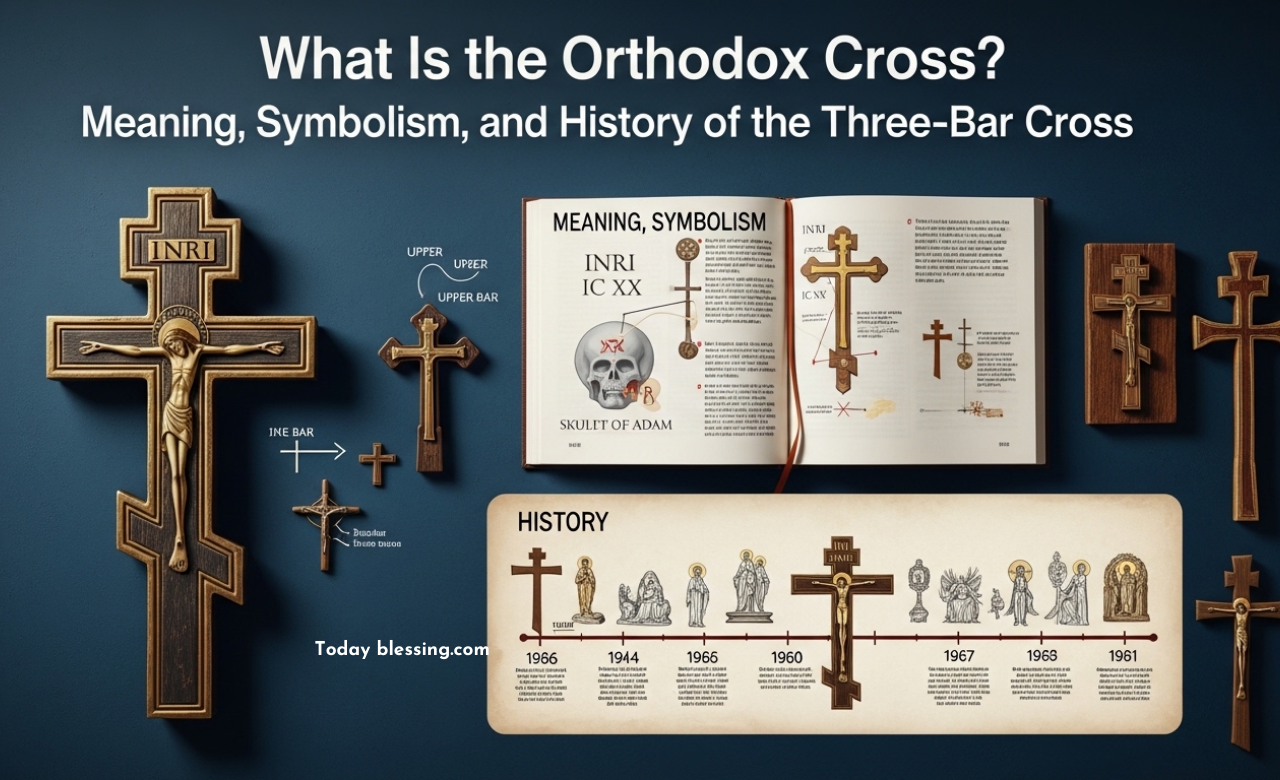
The Orthodox Cross is one of the most meaningful and spiritually layered symbols in Christian history. While many people are familiar with the traditional Latin cross, the three-bar Orthodox Cross immediately stands out due to its unique structure and deep theological symbolism. For centuries, this cross has represented not only the crucifixion of Jesus Christ but also the core teachings of Orthodox Christianity, including repentance, judgment, mercy, and eternal hope.
In the Orthodox Church, symbols are never random. Every shape, line, and inscription is intentional. The Orthodox Cross tells a complete Gospel story in visual form Christ as King, Christ as Savior, and humanity What Is the Orthodox Cross? Meaning, Symbolism, and History of the Three-Bar Cross standing before divine judgment. Its origins stretch back to , shaped by Byzantine theology, and later spread across Eastern Europe, Russia, the Balkans, and beyond.
This article provides an in-depth explanation of the Orthodox Cross, covering its history, symbolism, biblical meaning, regional variations, artistic importance, and modern-day relevance. Whether you are researching Christian symbols, deepening your faith, or studying church history, this guide offers a complete understanding of why the Orthodox three-bar cross remains one of the most powerful symbols in Christianity.
What Is the Orthodox Cross? Structure and Biblical Symbolism
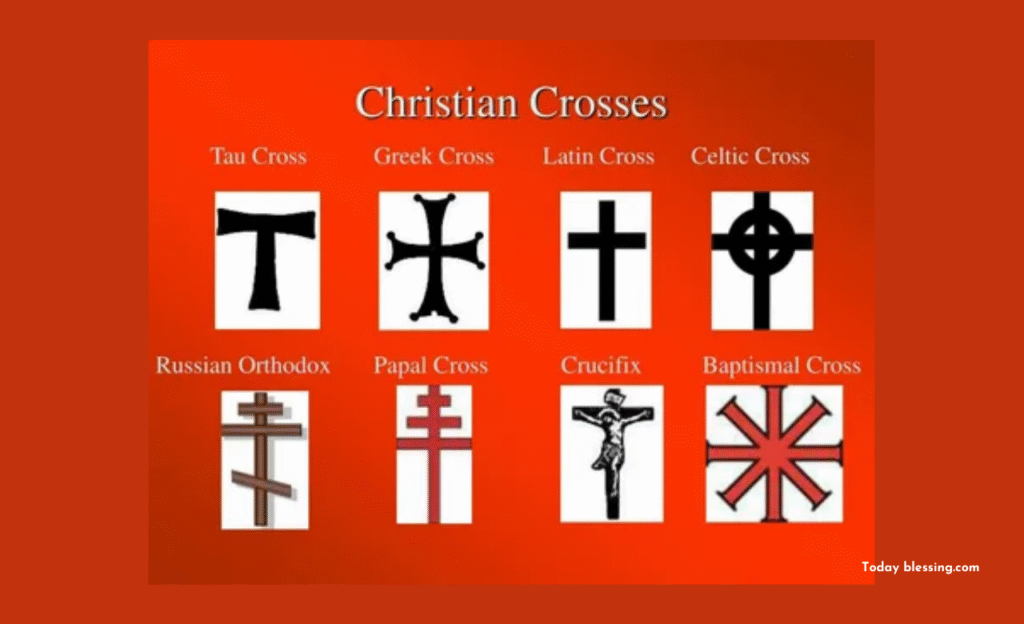
The Orthodox Cross is traditionally known as the three-bar cross or the eight-pointed cross. Unlike simpler cross forms, it visually narrates the crucifixion scene described in the Gospels.
The Three Bars of the Orthodox Cross and Their Meaning
Each bar of the Orthodox Church Cross carries deep biblical symbolism:
- Top Bar (Titulus Cross)
This bar represents the inscription ordered by Pontius Pilate:
“Jesus of Nazareth, King of the Jews.”
In Orthodox theology, this emphasizes Christ’s kingship, not mocked but proclaimed as divine truth. - Middle Bar (Main Crossbeam)
This is where Christ’s hands were nailed. It represents the sacrifice of Jesus, the central act of human redemption, and the fulfillment of Old Testament prophecy. - Bottom Slanted Bar (Suppedaneum / Footrest)
The most distinctive feature, this bar symbolizes judgment, repentance, and free will.
Together, these elements form a visual theology, teaching core Christian truths without words.
Why the Orthodox Cross Has an Additional Bar
Historically, Roman crucifixions often included a footrest. The Orthodox Church preserved this detail to convey deeper spiritual meaning. The slanted footrest is not about physical comfort it reflects spiritual direction.
- The upward side represents repentance and salvation
- The downward side represents rejection and condemnation
This symbolism aligns with Christ’s words on the cross and Orthodox teachings about moral choice.
Differences Between the Orthodox Cross and the Latin Cross
While the Latin Cross focuses primarily on Christ’s suffering, the Orthodox Cross meaning emphasizes:
- Christ’s victory over death
- Divine judgment and mercy
- Resurrection theology
This reflects a broader Orthodox emphasis on Christus Victor—Christ conquering sin and death.
Origins of the Orthodox Cross in Early Christianity
The Orthodox Cross in the Early Christian Church
In the first three centuries, Christians rarely displayed crosses openly due to persecution. Instead, symbols like the fish (Ichthys) or anchor were used. After Emperor Constantine legalized Christianity in the 4th century, the cross became a public symbol of faith.
Early versions of the Orthodox Cross appeared in churches, manuscripts, and Christian artifacts, reflecting theological development rather than artistic preference.
6th-Century Byzantine Foundations
By the 6th century, the Byzantine Empire had established a strong Christian identity. The Orthodox Cross evolved during this period as:
- A liturgical symbol
- A theological teaching tool
- A sign of imperial Christianity
Byzantine theologians emphasized symbolism, which directly influenced the cross’s final form.
How Byzantine Christianity Shaped the Orthodox Cross
Byzantine Christianity saw faith as something experienced through sight, sound, and ritual. The Orthodox three-bar cross fits perfectly into this worldview, serving as a visual sermon that complements Scripture and liturgy.
The Slanted Footrest Explained: Theology and Judgment
The Meaning of the Slanted Footrest (Suppedaneum)
The slanted bar meaning is rooted in the Gospel account of the two thieves crucified beside Jesus. One mocked Christ, while the other repented.
This bar teaches that:
- Salvation is available to all
- Repentance matters, even at life’s end
- Judgment is real, but mercy is greater
St. Dismas, the Penitent Thief, and Salvation
Orthodox tradition names the repentant thief St. Dismas. His confession—“Remember me, Lord, when You come into Your kingdom”—is central to Orthodox spirituality.
This moment shows that:
- God’s grace is never limited
- True repentance brings immediate hope
- Faith, not time, leads to salvation
Orthodox Interpretation of Judgment and Mercy
The Orthodox Cross symbolism presents judgment not as fear but as truth revealed. Christ’s cross becomes both a throne of mercy and a mirror of the human heart.
Orthodox Cross Variations Across Regions and Cultures
The Eight-Point Cross in Orthodox Tradition
The eight-pointed cross emerges from the three horizontal bars and the vertical beam. In Orthodox theology, the number eight symbolizes:
- Resurrection
- New Creation
- The Eighth Day (Eternity)
This makes the cross a symbol of life beyond death.
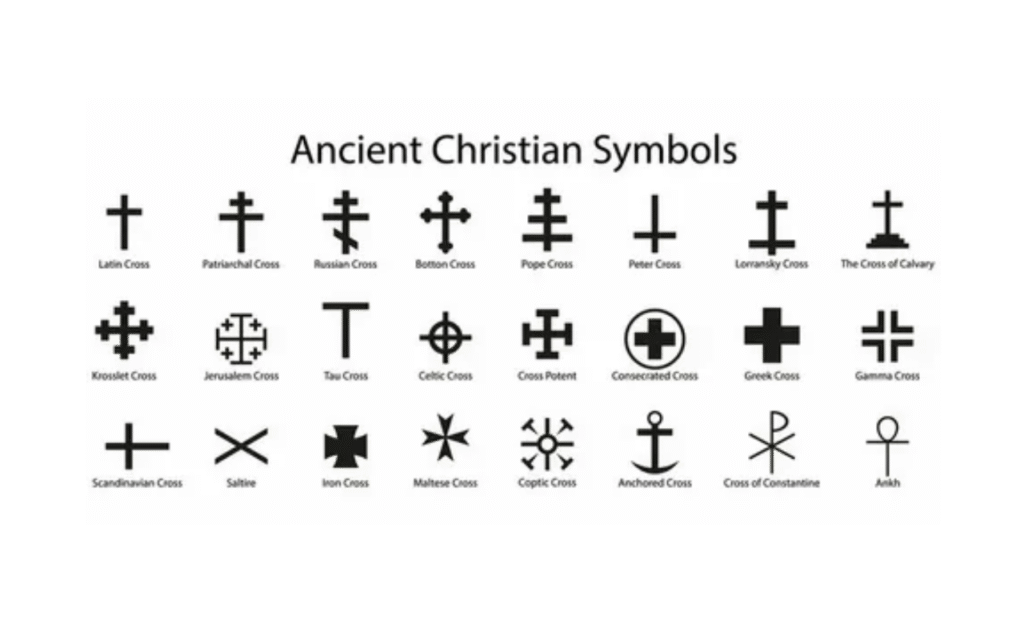
Old Believers and Traditional Cross Forms
The Old Believers preserved ancient Orthodox practices after church reforms in Russia. For them, the traditional Orthodox Cross design represented spiritual authenticity and resistance to change.
Orthodox Cross Usage in Eastern Europe
In regions like Ukraine, Belarus, Serbia, and Romania, the Orthodox Cross adapted to local art styles while maintaining theological meaning. It became a marker of Orthodox identity.
The Russian Orthodox Cross and National Identity
How the Russian Orthodox Cross Became a National Symbol
After the Christianization of Rus’, the Russian Orthodox Cross became deeply tied to national faith and identity. It symbolized:
- Divine protection
- Spiritual authority
- Cultural unity
Ivan the Terrible and the Standardization of the Cross
Under Ivan IV, the Orthodox Cross was widely used in architecture and state symbolism, reinforcing Orthodoxy as central to Russian life.
The Russian Church and the Theology of the Cross
Russian spirituality emphasized suffering, humility, and endurance, all reflected in the symbolism of the Orthodox Cross.
Artistic and Liturgical Significance of the Orthodox Cross
Orthodox Iconography and the Cross of Golgotha
In Orthodox icons, the cross often stands on Mount Golgotha, sometimes showing Adam’s skull, symbolizing Christ redeeming all humanity.
Liturgical Use of the Orthodox Cross in Worship
The Orthodox Cross is used in:
- Blessings
- Feast days
- Processions
- Personal prayer
It is not merely decorative it is active in worship.
Sacred Inscriptions Found on Orthodox Crosses
Common inscriptions include:
- IC XC (Jesus Christ)
- NIKA (Conquers)
- INBI (Jesus of Nazareth, King of the Jews)
These reinforce the victory of Christ.
The Orthodox Cross as a Symbol of Faith, Resistance, and Perseverance
The Cross During Persecution and Occupation
During Ottoman rule and communist oppression, the Orthodox Cross became a quiet symbol of resistance. Believers often hid crosses yet never abandoned faith.
Faith, Martyrdom, and Spiritual Resistance
Many Orthodox martyrs died refusing to renounce the cross, proving its power as a symbol of eternal truth.
Archaeological Discoveries and Historical Evidence
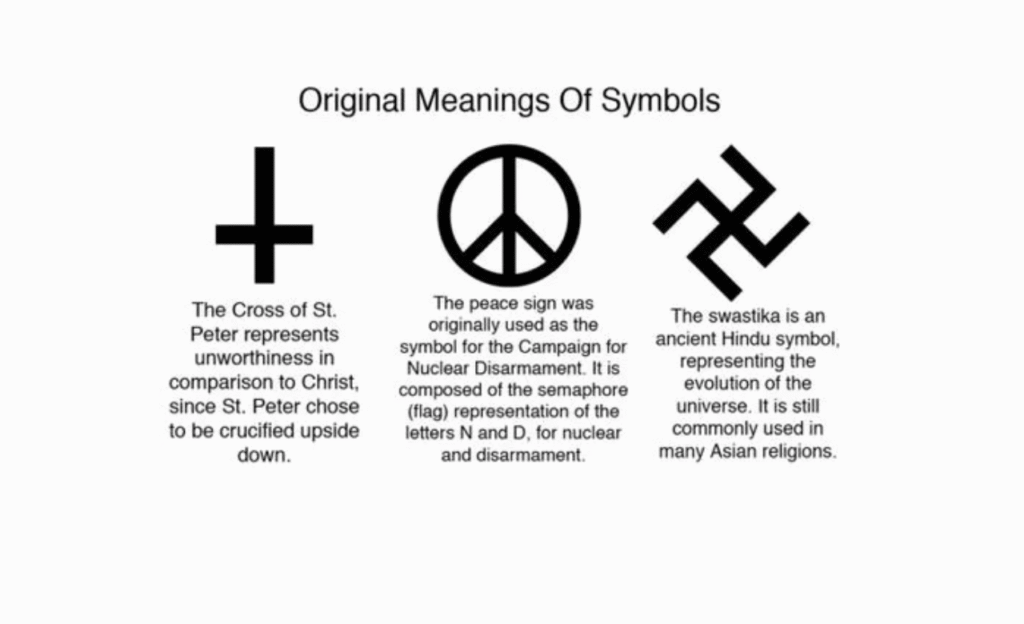
Archaeological findings confirm the early use of the Orthodox Cross in:
- Pre-Mongol Slavic regions
- Balkan monasteries
- Viking-Byzantine trade routes
These discoveries validate its historical authenticity.
The Orthodox Cross in Modern Global Christianity
Today, the Orthodox Cross meaning remains unchanged. It connects modern believers with centuries of faith, reminding them that Christ’s victory is eternal.
Frequently Asked Questions About the Orthodox Cross
Why does the Orthodox Cross have three bars?
It represents Christ’s title, crucifixion, and judgment.
Is the Orthodox Cross biblical?
Yes, its elements are rooted in Gospel accounts.
What does the slanted bar symbolize?
Repentance, judgment, and salvation.
What’s the difference between ✝ and ☦?
The ✝ Latin Cross is mainly used in Catholic and Protestant Christianity and focuses on Jesus Christ’s sacrifice and suffering.
The ☦ Orthodox Cross has three bars and represents Christ’s kingship, judgment, repentance, and resurrection. It tells the full story of salvation.
What is the symbolism behind the Orthodox cross?
The Orthodox Cross symbolism represents Christ as King, His crucifixion, and human choice between salvation and judgment. The slanted bar reflects the two thieves, showing repentance leads to eternal life.
What does the triple cross symbolize?
The triple cross symbolizes Christ’s authority, sacrifice, and victory over death. it represents the complete Gospel message death, judgment, and resurrection.
Conclusion
The What Is the Orthodox Cross? Meaning, Symbolism, and History of the Three-Bar Cross is far more than a distinct Christian symbol it is a powerful visual expression of the Gospel message. Through its three-bar design, the cross proclaims Christ’s kingship, His sacrificial death, and the choice between repentance and judgment. Rooted in early Christianity and shaped by Byzantine theology, the Orthodox Cross reflects the core beliefs of Orthodox Christianity: salvation through humility, victory through the cross, and eternal life through resurrection.
From ancient Byzantine churches to modern Orthodox worship, the three-bar Orthodox Cross continues to unite believers across cultures and generations. It stands as a reminder that the cross is not only an instrument of suffering but also a sign of hope, redemption, and triumph over death. By understanding its history, symbolism, and spiritual meaning, we gain deeper insight into the enduring faith and theological richness of the Orthodox Christian tradition. visit my other article 20+ Powerful Prayers for Your Boyfriend’s Success, Wealth, and Happiness
